A deck looks like a simple project until it fails. In Greater Boston, decks fail in three ways: framing that was never permitted or inspected, ledger connections that pull off the house in a snow year, and surface material that cups, splinters or fades within five years. All three are preventable. All three are common.
Here is what actually goes into a deck that lasts thirty years in New England — including the permit process, the material trade-offs, and what a real timeline looks like.
The three deck materials that make sense in New England
Pressure-treated pine
The workhorse of the region. Structurally excellent, inexpensive, widely stocked. As a surface material it is passable — needs an annual look, a stain every 2–3 years, and eventually splinters and cups regardless of maintenance. Best used as the framing under a nicer surface material.
- Cost installed: $28–$45 per square foot for a full deck.
- Lifespan: 15–20 years for the surface, 25–30 for framing when properly detailed.
Cedar
Softer, warmer, more traditional-looking. Weathers to a silver-grey if left unfinished, which many homeowners prefer. Needs stainless fasteners and disciplined maintenance to look intentional rather than neglected. Not a great choice for a heavily used family deck with pets and grills.
- Cost installed: $40–$60 per square foot.
- Lifespan: 15–25 years depending on maintenance.
Composite (Trex, TimberTech, AZEK and equivalents)
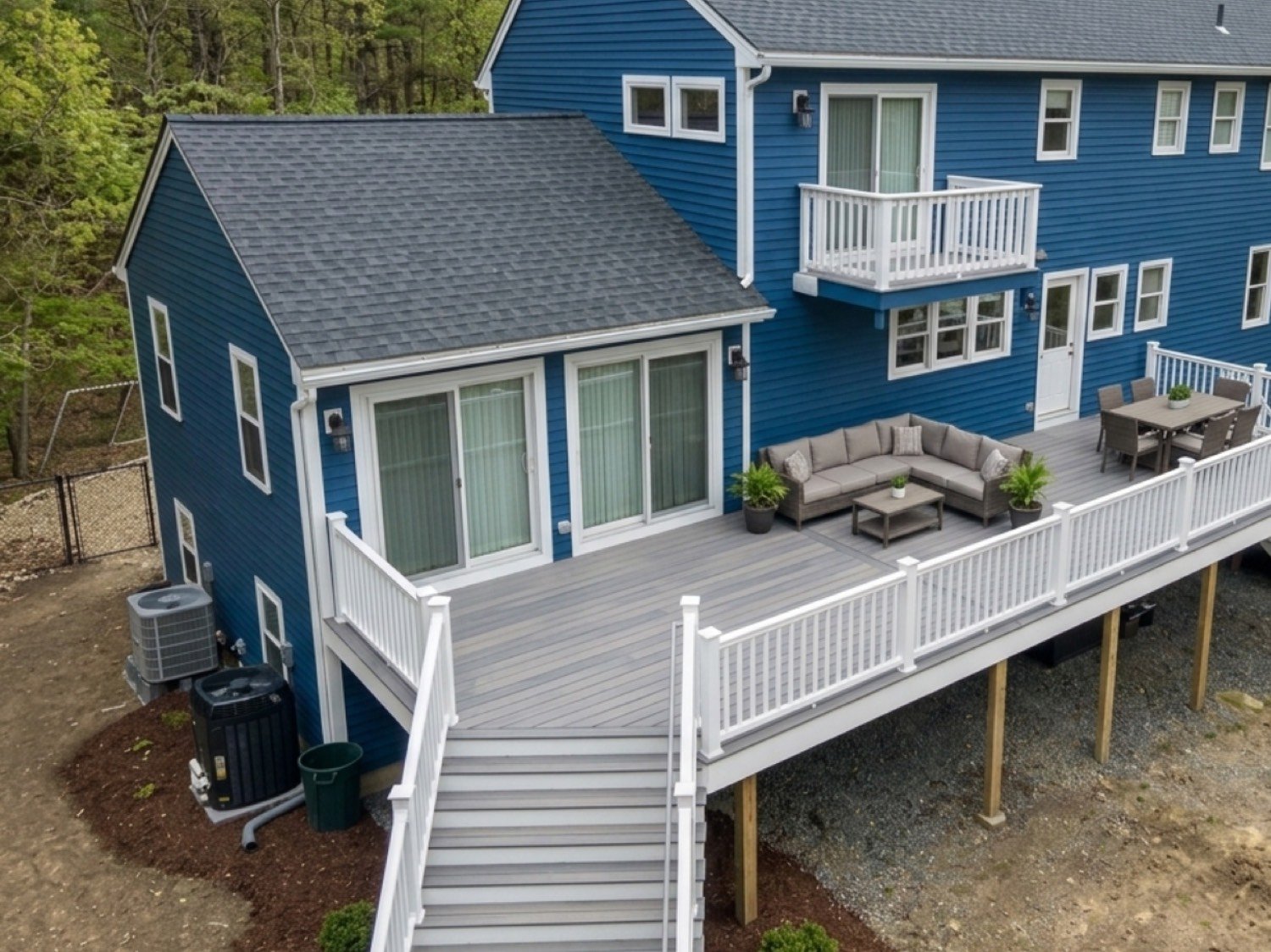
The dominant surface material for new decks in Greater Boston today, and for good reason: it does not splinter, does not need annual staining, holds color for 15+ years, and comes in profiles that look increasingly close to real wood. The catch is upfront cost and a somewhat different feel underfoot.
- Cost installed: $50–$85 per square foot depending on brand and railing choice.
- Lifespan: 25–30 years for the surface, warrantied 25 years or more against fade and stain.
Contractor's Note
Composite decking is only as good as its substructure. A composite surface on rotting pressure-treated framing is a $50,000 deck that fails in ten years. Do not skip the framing conversation.
Permits in Massachusetts (yes, you need one)
Under the Massachusetts State Building Code (780 CMR), a deck permit is required for any deck attached to a home, and for freestanding decks over 30 inches above grade. In practice, this means almost every deck built in Greater Boston needs a permit. There are two reasons you want it anyway:
- Insurance. If an un-permitted deck collapses during a party, your homeowner's insurance may deny the claim.
- Resale. Un-permitted structures show up in the real-estate transaction and force a retroactive permit or a demolition — both expensive.
Permit fees in Greater Boston range from roughly $75 to $400 depending on the town and project value. A licensed general contractor pulls the permit under their CSL, coordinates the framing inspection before decking goes down, and schedules the final inspection when the job is done. Skip that sequence and you are stuck getting the deck signed off retroactively.
Ledger boards: the single most important detail
The ledger board is the piece of framing that attaches the deck to the house. Improperly installed ledgers are the number-one cause of deck collapses in the United States. In New England, freeze-thaw makes this failure mode worse because water gets trapped between ledger and house, freezes, and levers the connection apart.
A correctly installed ledger has:
- Through-bolted lag connections into the rim joist of the house (not just nailed).
- Z-flashing above the ledger to shed water down the face of the house instead of into the joint.
- A drainage gap between ledger and siding to prevent trapped moisture.
- Hot-dipped galvanized or structural screws rated for pressure-treated lumber.
Any deck without those four things is on borrowed time.
Realistic timeline
A typical 300–400 sq ft attached deck in Greater Boston runs:
- Estimate and design: 1 week from first walkthrough.
- Permit approval: 2–4 weeks depending on the town.
- Material lead time: 1–3 weeks (composite decking often has longer lead than PT lumber).
- Construction: 5–10 working days for a straightforward attached deck, longer for multi-level or curved layouts.
- Framing inspection: scheduled mid-build, typically within a week of request.
- Final inspection: scheduled at completion.
From "yes, let's do it" to a signed-off deck: 5–10 weeks is typical in Greater Boston.
"The framing inspection is not paperwork. It is the last time somebody sees the deck before it disappears behind the finish material." — Monteiro Crew
Add-ons worth considering up front
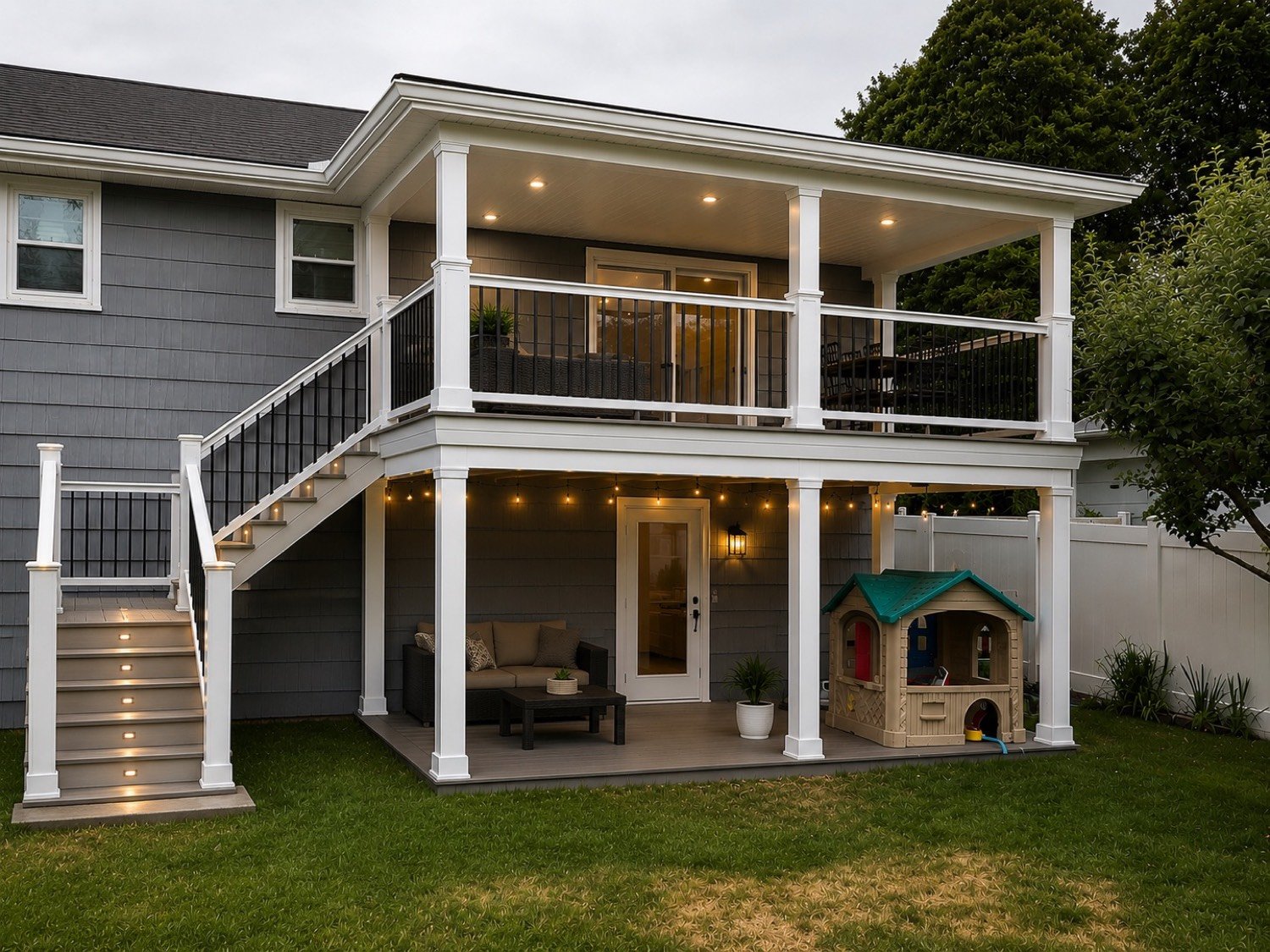
- Under-deck drainage system. Turns the space below the deck into usable dry patio. Cheap to add during construction, expensive to retrofit.
- Integrated lighting. Post caps, stair risers, or perimeter lighting. Wire is easy while the framing is open.
- Composite fascia and skirt. The wraparound trim that keeps the deck from looking half-finished.
- Cable or glass railing. Preserves the view. More expensive, but for view lots the upgrade pays back visually.
Common mistakes we see on second-opinion visits
- Deck ledger nailed instead of through-bolted.
- No flashing behind the ledger — visible water staining on the wall below.
- Undersized joists spanning too far for the load.
- Posts sitting on concrete pads without proper post bases (leads to rot at the base within 5 years).
- Railing systems that fail the 200-pound load test at the top rail — a code requirement, not an option.
If you are planning a deck or evaluating a quote from another contractor, we are happy to walk the space with you and give you a written estimate that spells out framing, connections, drainage and material grade — not just square-foot pricing.